

News Details
30
2026
-
01
Automatic Door Sensors for Shopping Malls | Safety, Efficiency & Smart Entry Solutions
Discover how automatic door sensors improve safety, traffic flow, and energy efficiency in shopping malls. Learn about sensor types, features, and best solutions for high-traffic entrances.
Modern shopping malls depend heavily on seamless, high-traffic entry systems. At the center of these systems are automatic door sensors—critical components that ensure doors open and close safely, efficiently, and intelligently. In a retail environment where thousands of visitors pass through daily, choosing the right sensor technology directly impacts safety compliance, energy efficiency, and overall customer satisfaction.
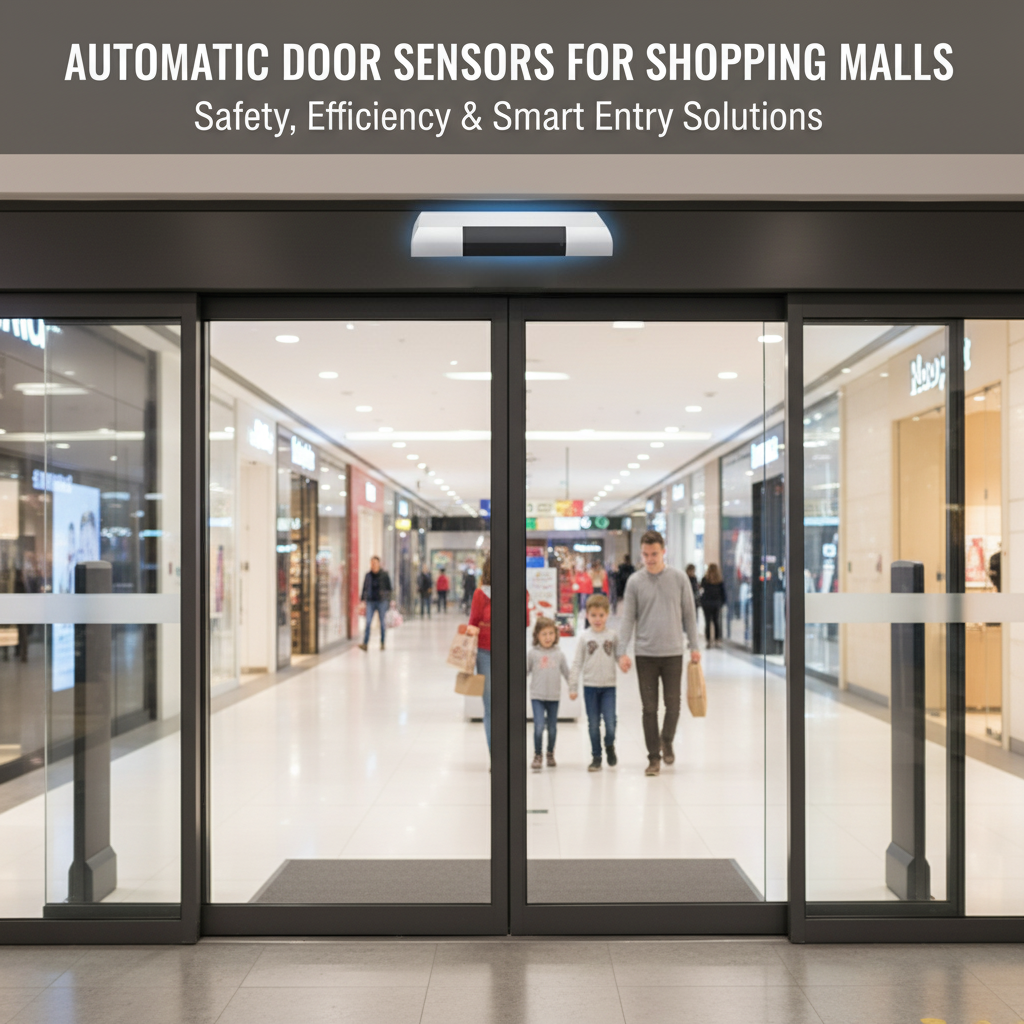
What Are Automatic Door Sensors?
Automatic door sensors are detection devices that trigger door movement based on motion, presence, or safety criteria. In shopping malls, they are typically installed above or near entrances, escalator access points, and interior retail doors.
Their primary functions include:
Detecting approaching pedestrians
Preventing doors from closing on people or objects
Optimizing door opening/closing timing for traffic flow
Why Shopping Malls Require Advanced Sensor Systems
Unlike small commercial spaces, shopping malls present unique operational challenges:
1. High Foot Traffic Density
Malls experience continuous, bidirectional pedestrian flow. Sensors must distinguish between people entering, exiting, or simply passing by.
2. Safety Compliance
Public venues must adhere to strict safety standards (e.g., EN16005 in Europe). Sensors must reliably detect stationary and moving objects to prevent accidents.
3. Energy Efficiency
Frequent door openings can lead to HVAC losses. Intelligent sensors help minimize unnecessary openings, reducing energy costs.
4. Accessibility
Sensors must accommodate all users, including children, elderly individuals, and people with disabilities.
Types of Automatic Door Sensors Used in Shopping Malls
1. Microwave Sensors (Radar Sensors)
How they work:
Emit microwave signals and detect motion via frequency shifts.
Advantages:
Wide detection range
Effective for fast-moving traffic
Not affected by lighting conditions
Limitations:
May detect unwanted motion (e.g., people walking parallel to the door)
Best use case:
Main entrances with heavy foot traffic
2. Infrared Sensors (IR Sensors)
How they work:
Detect heat signatures or reflected infrared light.
Advantages:
High accuracy for presence detection
Ideal for safety applications
Limitations:
Can be affected by environmental conditions (sunlight, temperature)
Best use case:
Safety zones near door thresholds
3. Laser Sensors
How they work:
Use laser beams to create precise detection fields.
Advantages:
Extremely accurate detection
Customizable detection zones
Suitable for complex environments
Limitations:
Higher cost
Best use case:
High-end malls or architecturally complex entrances
4. Dual Technology Sensors
How they work:
Combine microwave and infrared technologies.
Advantages:
Reduces false triggers
Balances motion detection and presence safety
Best use case:
Premium shopping malls requiring both safety and efficiency
Key Features to Look for in Mall Applications
When selecting automatic door sensors for a shopping mall, consider the following:
1. Directional Detection
Prevents unnecessary door openings by distinguishing between approaching and passing traffic.
2. Adjustable Detection Zones
Allows fine-tuning based on entrance size and layout.
3. High Immunity to Interference
Reduces false activations caused by reflections, weather, or nearby movement.
4. Safety Monitoring Capabilities
Ensures compliance with international safety standards.
5. Integration with Building Systems
Modern sensors can integrate with:
HVAC systems
Security systems
Smart building platforms
Benefits of Using Advanced Automatic Door Sensors
Improved Customer Experience
Doors open smoothly and predictably, creating a welcoming entrance.
Enhanced Safety
Prevents accidents and ensures compliance with safety regulations.
Energy Savings
Reduces unnecessary door openings, maintaining indoor climate control.
Operational Efficiency
Minimizes maintenance issues and downtime.
Common Challenges and How to Solve Them
| Challenge | Solution |
|---|---|
| False triggering | Use dual technology sensors |
| Poor detection in crowded areas | Upgrade to laser or advanced radar sensors |
| Environmental interference | Choose sensors with filtering algorithms |
| High maintenance costs | Invest in high-quality, durable sensors |
Future Trends in Shopping Mall Door Sensors
AI-Powered Detection
Sensors are becoming smarter, using AI to distinguish between humans, objects, and environmental noise.
Touchless & Hygiene-Focused Solutions
Post-pandemic demand continues to drive adoption of fully contactless entry systems.
Smart Analytics Integration
Sensors can provide data on:
Foot traffic patterns
Peak hours
Customer behavior
This data can be leveraged for retail optimization and marketing strategies.
Conclusion
Automatic door sensors are far more than simple motion detectors—they are a foundational element of modern shopping mall infrastructure. By selecting the right combination of sensor technologies, mall operators can significantly enhance safety, improve energy efficiency, and deliver a superior customer experience.
For high-traffic environments like shopping malls, dual technology or laser-based sensors are typically the most reliable investment, offering the precision and intelligence required to handle complex, dynamic conditions.


Contact Information
Add: No.991 Xingxiu Road,Taiwanese Investment Zone, Quanzhou, Fujian Province,P.R.China
Tel: +86 136 1606 8720
E-mail: [email protected]
friendly links: GatePartsHub gate operator accessories